70s Hair and Makeup: 10 Best Iconic Looks You Should Try
Master iconic 70s hair and makeup — feathered layers, boho waves, disco glam, and bold eyeshadow secrets that still stun everyone today.
Introduction
There is a reason beauty keeps circling back to the 1970s. The decade gave us some of the most fearless, expressive, and genuinely gorgeous hair and makeup looks in all of beauty history — and they still feel completely relevant every time they resurface.
70s hair and makeup were never one single aesthetic. It was a collision of movements, moods, and cultural moments all happening at once. Bohemian hippie beauty existed right alongside disco glam. Natural afros and feathered layers were both icons of the same decade. And throughout it all, there was a shared spirit of confidence, freedom, and unapologetic self-expression that made every look feel powerful rather than just pretty.
In this complete guide, you’ll find 10 of the most iconic 70s hair and makeup looks to try — along with the products, techniques, and styling tips you need to recreate them beautifully today.
What Made 70s Hair and Makeup So Special?
The 1970s were a genuinely transformative decade for beauty. Coming off the theatrical excesses of the 1960s, the early 70s pulled things back toward nature — glowing skin, earthy tones, and a general sense that beauty should enhance your real self rather than replace it entirely. Then, as the decade progressed, disco swept in and pushed everything back toward glamour, glitter, and drama.
What makes 70s hair and makeup so enduring is its emotional range. The natural boho look of Stevie Nicks and the disco glam of Diana Ross both lived in the same decade, which meant the 70s could be whatever you needed it to be. As one beauty writer puts it, the era was about “blending retro inspiration with contemporary techniques” in a way that creates something that feels both timeless and genuinely current.
Hollywood and music were the dominant forces for ’70s hair and Makeup. Farrah Fawcett’s feathered layers made salons report that up to 90% of female clients were requesting “The Farrah.” Diana Ross’ voluminous curls became synonymous with disco royalty. Angela Davis’ afro became a cultural and political symbol of pride and identity. And figures like Bianca Jagger and Liza Minnelli brought a sharp, glamorous edge to the makeup conversation that still feels completely sophisticated today.
10 Iconic 70s Hair and Makeup Looks to Try
1. Farrah Fawcett Feathered Hair
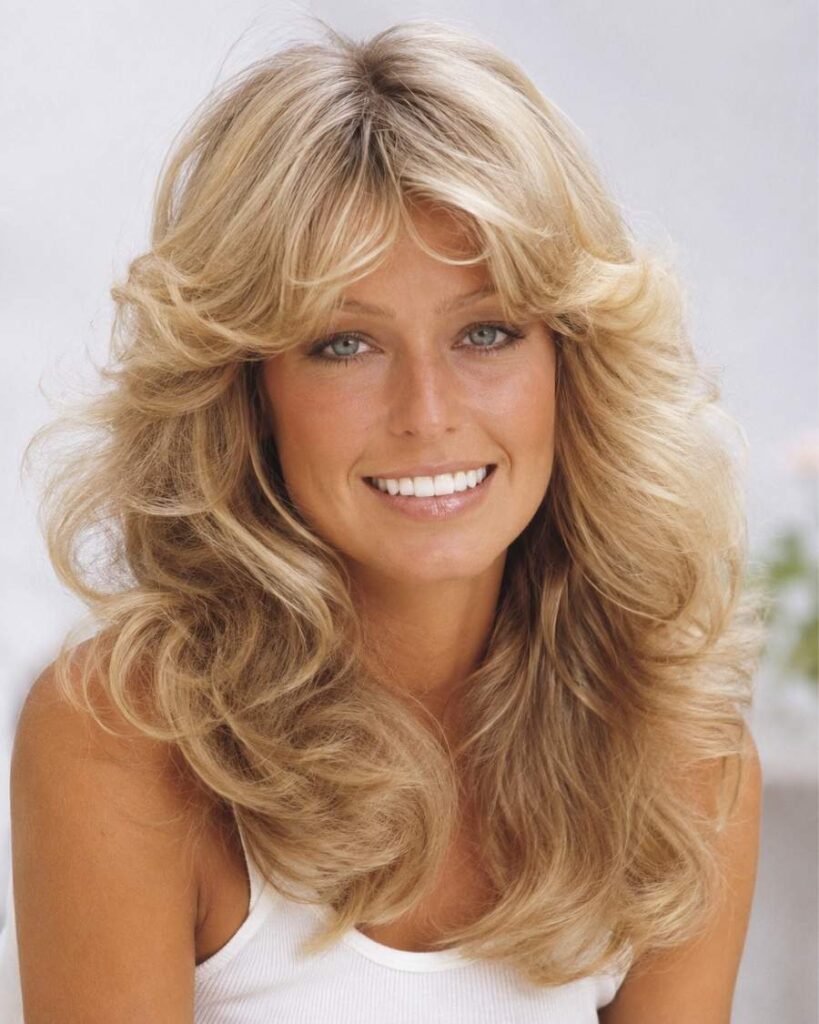
If there’s one single hairstyle that defines 70s hair and makeup in the popular imagination, it’s Farrah Fawcett’s iconic feathered cut. Characterized by soft, face-framing layers that swept back and outward like feathers — creating incredible volume and movement — this look became a global sensation when Charlie’s Angels debuted and has never truly gone away.
Hairstylist Leigh Kasica describes it perfectly: “When I think of iconic ’70s hair, who else but Farrah Fawcett comes to mind? That layered look, all blown back, is very much in style right now. The ’70s were all about volume, tousled hair, and the sex-kitten vibe.”
To recreate this at home, ask your stylist for long layers concentrated around the face and crown. At home, use a large round brush and a blow dryer to flip the ends outward and away from the face. Work in sections, directing the airflow toward the back of the head. Finish with a generous application of hairspray to lock the flipped layers in place and give them that bouncy, light-catching quality that made Farrah’s hair so magnetic.
2. The Natural Bohemian Beauty Look
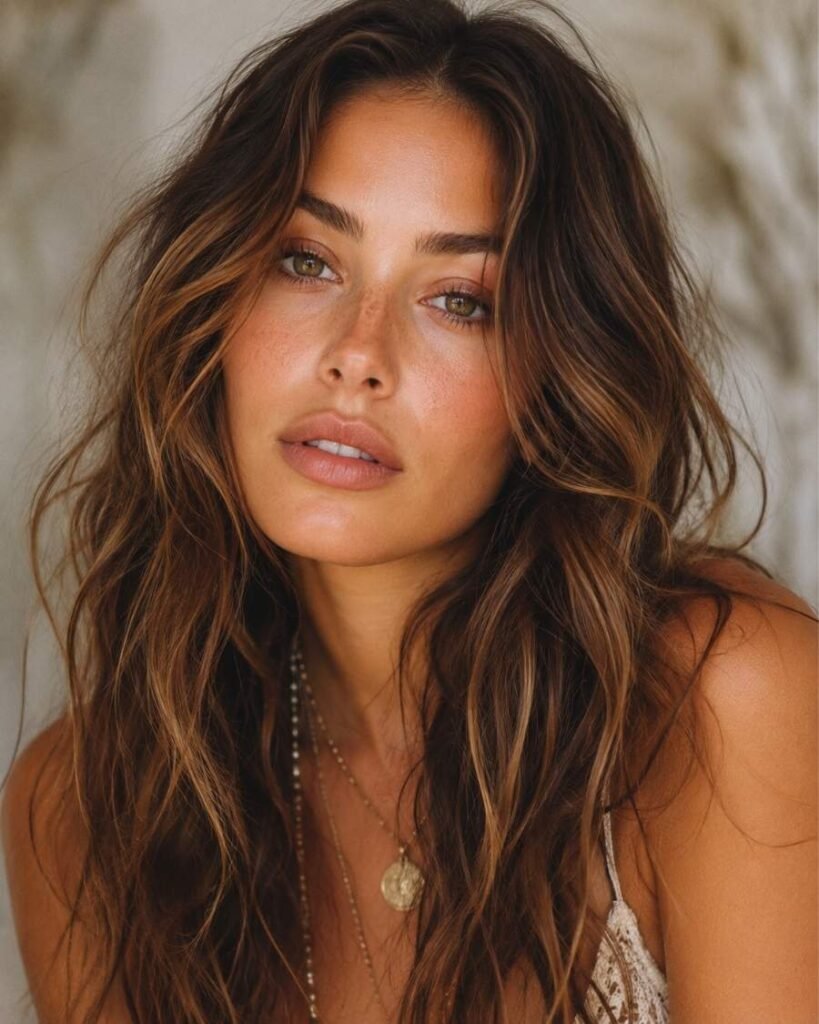
The boho beauty aesthetic is arguably the most influential contribution of early 70s hair and makeup culture. Inspired by the hippie movement, it celebrated natural skin, earthy color palettes, and the idea that makeup should enhance rather than mask.
For skin, the goal was warmth — a naturally bronzed, sun-kissed complexion achieved with a light foundation or tinted moisturizer, terracotta blush dusted across the cheeks and the bridge of the nose, and a luminous finish that looked genuinely healthy. Tan skin was very much the beauty ideal of the era, and bronzer was central to achieving it.
Eyes were kept soft and natural — often just a warm brown eyeshadow in the crease, a coat of mascara on both upper and lower lashes, and nothing more. Lips were peachy, pink, or nude with a slight gloss — never dramatically drawn or heavily lined. The entire look was about believable beauty: the kind of face that looks like you just came in from a warm afternoon in a meadow somewhere.
3. The Shag Haircut
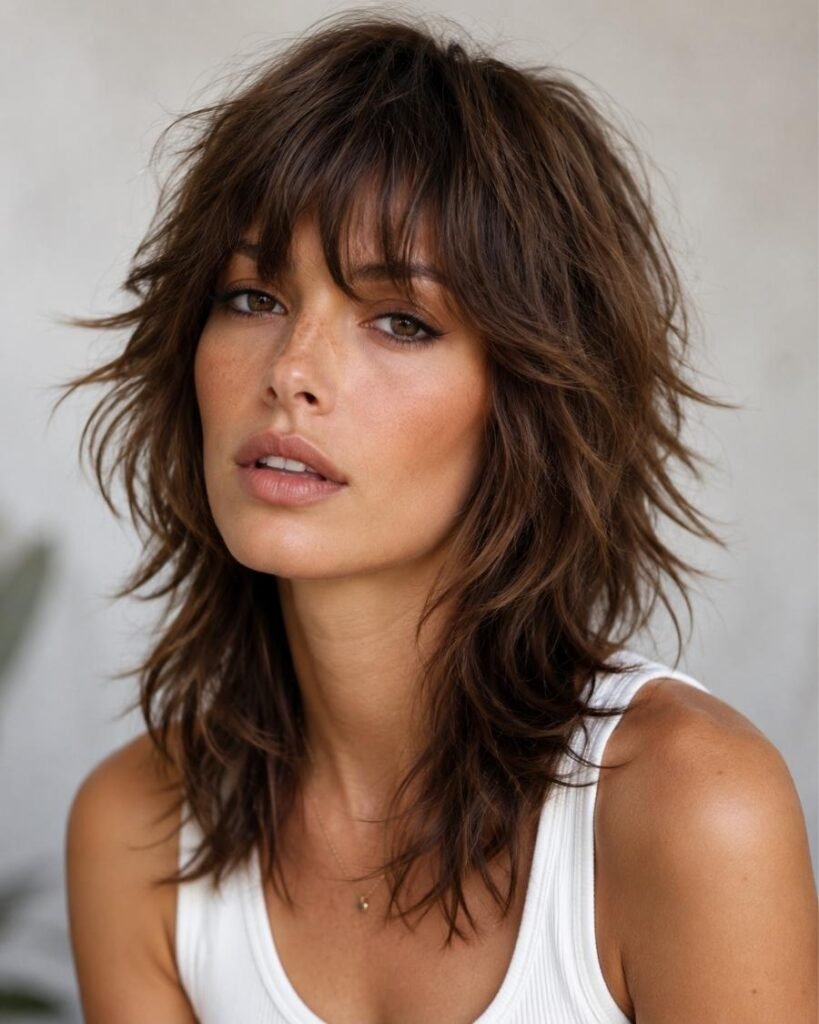
The shag is one of the most beloved and widely requested 70s hair and makeup era hairstyles — and it’s not hard to see why. Characterized by heavy layering through the crown and a face-framing fringe, the shag created a gorgeously tousled, lived-in texture that looked effortlessly rebellious.
Popularized by rock icons like Rod Stewart and Mick Jagger, the shag was also deeply loved by the women of the decade, particularly those in the music and fashion worlds who wanted something that felt expressive and a little undone. Today’s version of the shag typically includes curtain bangs and choppy layers and is styled with texturizing spray or a diffuser for maximum tousled texture.
To achieve the shag, ask your stylist for razor-cut layers focused through the crown and mid-lengths, with longer layers toward the bottom to create that iconic cascading movement. At home, scrunch mousse through damp hair and allow it to air-dry naturally, or use a diffuser on low heat to enhance the texture without eliminating the natural volume the layers create.
4. The Afro
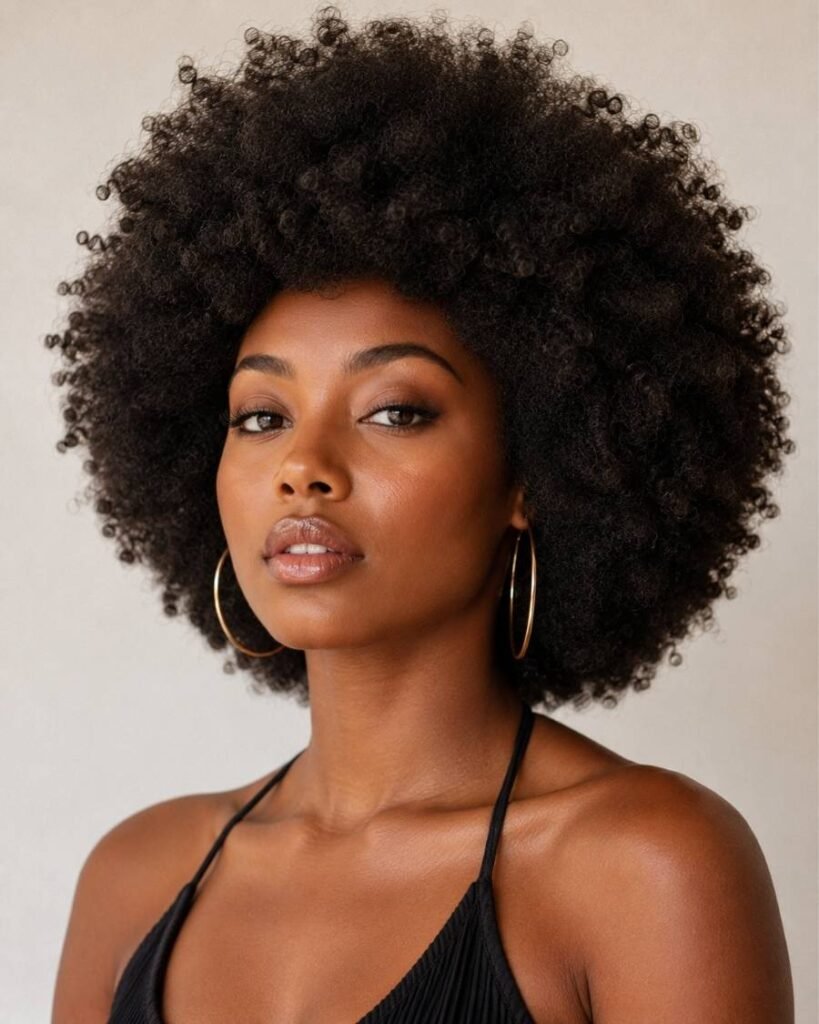
The afro is the most culturally significant hairstyle of the 1970s — a powerful, beautiful, and deeply political statement of Black identity, pride, and beauty. Icons like Angela Davis, Jimi Hendrix, and Diana Ross wore their natural texture with a confidence that challenged beauty standards and changed conversations around identity forever.
For women with naturally coily and kinky hair, the afro celebrates your hair’s natural shape and volume rather than suppressing it. Use a pick to lift the roots and expand the shape, then define with a light curl cream or moisturizing oil to add shine and reduce frizz. A light application of volumizing mist helps maintain size throughout the day without weighing the hair down.
The afro isn’t a historical relic like just for 70s hair and makeup — it’s a continuing celebration of natural beauty that remains deeply relevant and deeply loved.
5. Disco Glam Makeup
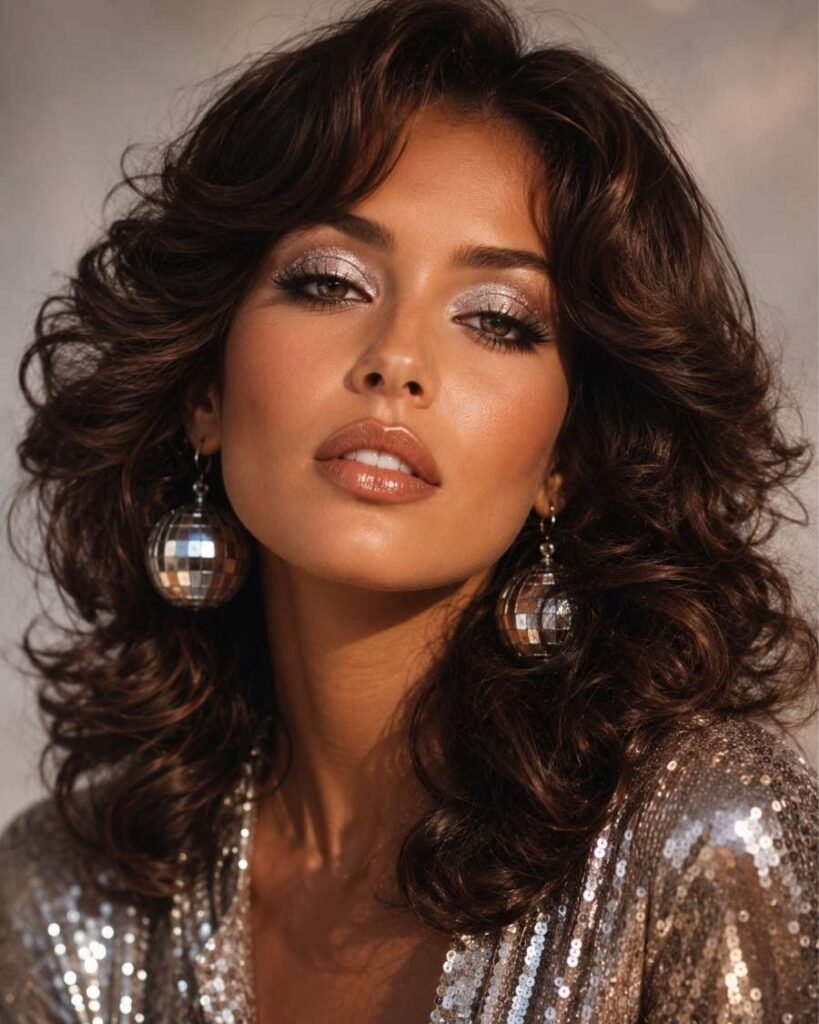
As the late 1970s brought disco to the forefront of popular culture, 70s hair and makeup took a dramatic turn toward the theatrical. The disco makeup look was about sparkle, color, and unapologetic glamour — built for dance floors, Studio 54, and any environment where you wanted to be absolutely impossible to ignore.
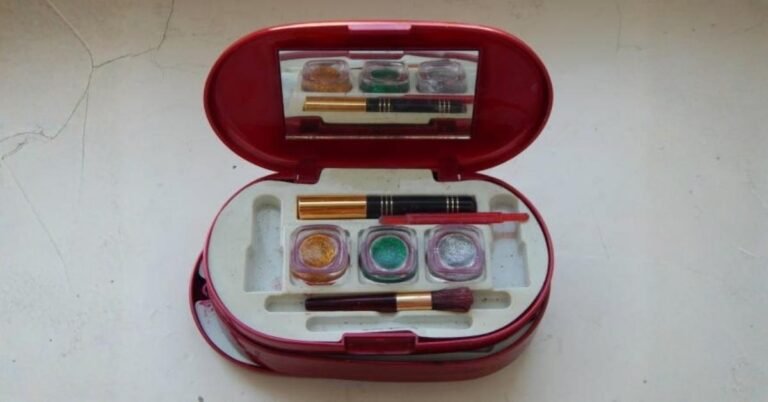
The centerpiece of the disco face was the eyes. Bold, glittery eyeshadows in jewel tones — electric blue, emerald green, silver, and gold — were pressed onto the lids with fingers for maximum intensity. Black or brown liner traced the upper lash line and extended into a slight wing, and mascara was layered heavily on both upper and lower lashes to create that heavy-lidded, dramatic look that defined the era.
Skin was kept glowing and dewy rather than matte, and blush was applied with a generous hand in coral or peachy pink. Lips were kept slightly understated against the drama of the eyes — a glossy nude, soft peach, or sheer berry was the most common pairing. The goal was a complete, show-stopping look that felt like a collaboration between art and fashion.
6. Voluminous Disco Curls
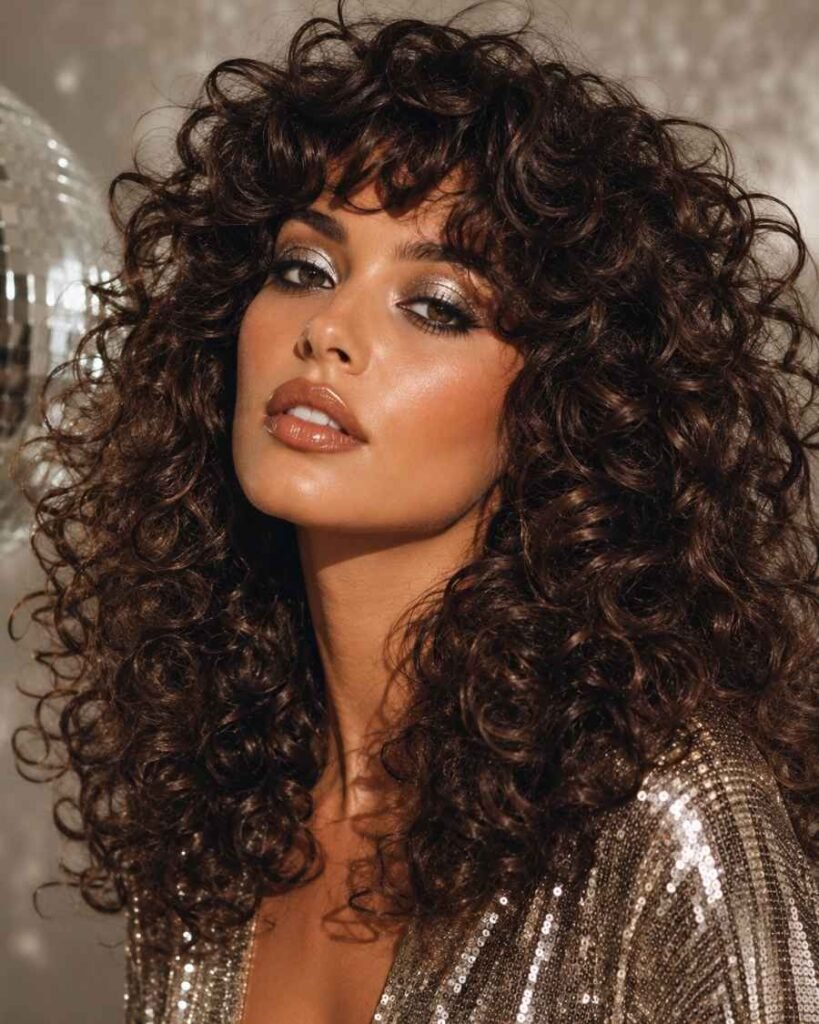
The disco era demanded big hair — and nothing delivered bigger hair than the voluminous, bouncy curls that became synonymous with nightlife and Studio 54. Donna Summer, Diana Ross, and Cher all wore versions of this look, and it remains one of the most joyful and dramatic expressions of 70s hair and makeup culture.
Perms were the primary method of achieving these curls in the decade — a chemical process that transformed straight hair into a permanent wave pattern. Today, the same look can be achieved with a large-barrel curling iron, flexi rods, or a perm from a professional salon. The goal is defined: springy curls with serious volume at the root.
To style, apply a curl-defining cream or mousse to damp hair before setting it in your chosen method. Diffuse on low heat or allow to air-dry completely before gently separating the curls with your fingers — never a brush, which would create frizz and eliminate definition. Finish with a light-hold hairspray to maintain the shape without making the curls stiff or crunchy.
7. Curtain Bangs with Center Part
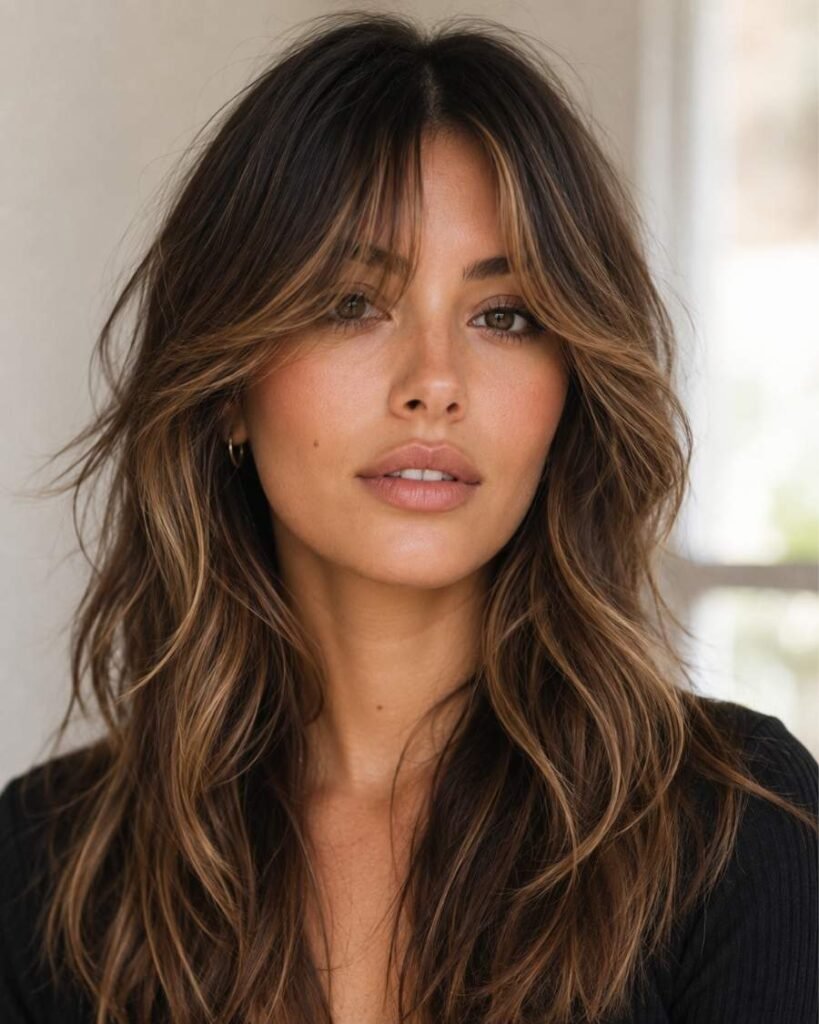
The center part with curtain bangs is one of the most recognizable and widely reproduced 70s hair and makeup era hairstyles — and it’s been requested at salons consistently ever since it first appeared on the faces of folk singers, models, and screen stars throughout the decade.
Curtain bangs part naturally at the center of the forehead and sweep gently to each side, framing the face softly without the bluntness of a straight-across fringe. Combined with a deep center part on longer hair, the effect is genuinely romantic, bohemian, and completely flattering on most face shapes.
To style curtain bangs, blow-dry them with a round brush, curling each side away from the center part. A small barrel curling iron can also help if your bangs tend to fall flat. They look beautiful air-dried as well, which makes them one of the most low-maintenance of all 70s hair and makeup era looks to wear daily.
8. The Smoky Eye with Nude Lip
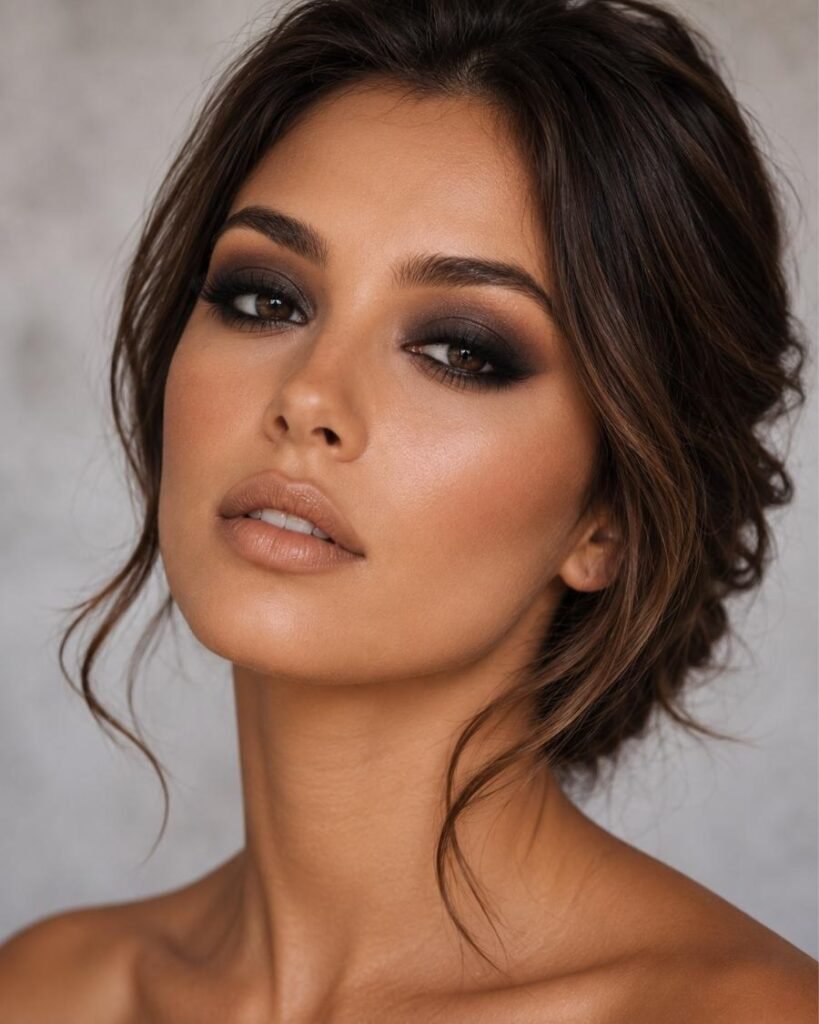
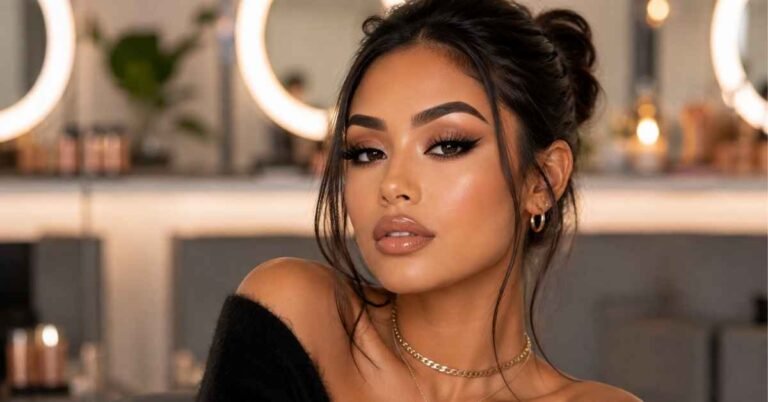
The smoky eye is one of the most sophisticated and enduring legacies of 70s hair and makeup culture. Unlike the graphic, precise liner-based eye looks of the 1960s, the 70s smoky eye was softer, more diffused, and built from blended layers of eyeshadow rather than sharp pencil lines.
Start with a neutral base shadow across the entire lid, then deepen the crease and outer corner with a dark brown, espresso, or charcoal shade. Blend thoroughly in circular motions until there are no harsh lines — the smoked effect comes from seamless gradations of color rather than precise placement. Line the upper lash line with a kohl or soft pencil and smudge slightly for that signature 70s diffused quality. Add mascara to both upper and lower lashes, and the look is complete.
Balance the smoky eye with a nude, peachy, or barely-there lip. This pairing — which originated as a practical approach to evening makeup in the 70s — has become one of the most universally flattering and replicable combinations in all of makeup history, proving that the best 70s hair and makeup decisions genuinely were timeless.
9. The Pastel Blue Eyeshadow Look
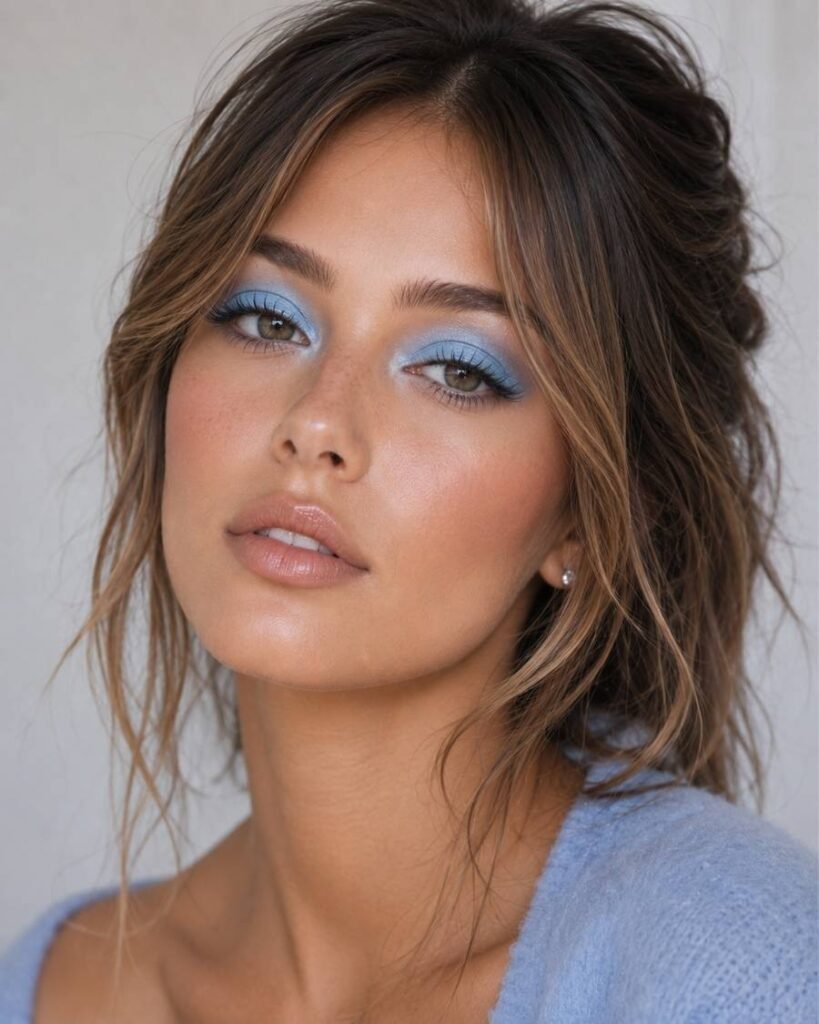
Pastel blue eyeshadow is one of the more surprising and genuinely fun contributions of 70s hair and makeup beauty culture. Introduced by Twiggy in the late 1960s, the trend carried beautifully into the 70s, where it sat perfectly alongside the decade’s love of self-expression and bold creative choices.
A wash of powder blue, cornflower, or periwinkle across the entire lid — applied with the fingertip as was common in the era — creates an instantly retro, surprisingly wearable effect. Keep the rest of the face soft and natural to avoid competition: minimal mascara, a light bronze blush, and a peachy or nude lip. The blue shadow should be the clear focal point.
Modern formulas are far more pigmented than their 70s counterparts, so apply with a light hand and build gradually. As one beauty expert notes, the goal is to “embrace bold, bright pigments for an unmistakably cool look” without the heaviness that comes from over-application.
10. The Sun-Kissed Bronzed Skin Look
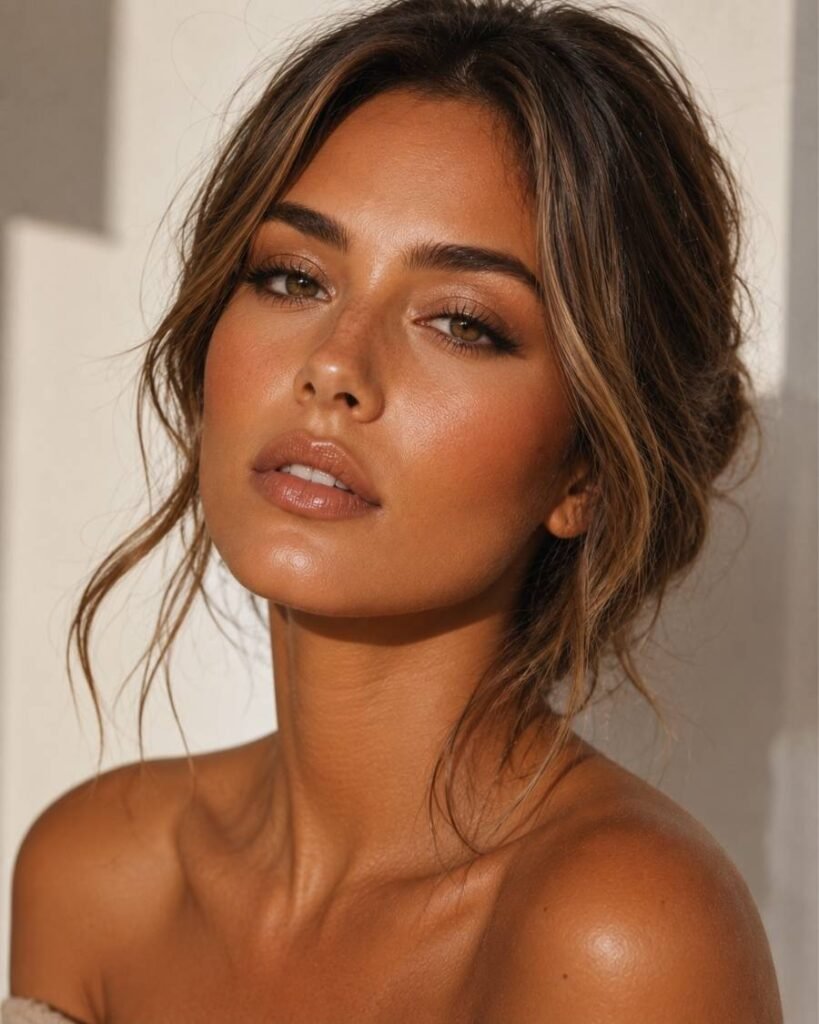
If one concept ties together the entire spectrum of 70s hair and makeup aesthetic — from boho to disco — it’s bronzed, glowing skin. The ideal complexion of the decade was healthy, warm, and luminous, with a sun-kissed finish that made the face look alive and vibrant regardless of what else was happening with the eyes or lips.
Apply a warm-toned bronzer to the areas where the sun would naturally hit — the forehead, cheekbones, nose bridge, and chin. Then add a touch of liquid highlighter to the tops of the cheekbones and the bridge of the nose to create that lit-from-within glow that defined the decade. A drop of illuminating liquid mixed directly into your foundation achieves an even more seamless, skin-like radiance.
Keep the skin finish dewy rather than matte — the 70s loved luminosity. Use a hydrating foundation or tinted moisturizer as your base, and resist the urge to set everything down with powder. The warmth and glow of the skin was considered one of the decade’s greatest beauty achievements, and it remains one of the most universally flattering approaches to base makeup that beauty has ever developed.
Key Products for Recreating 70s Hair and Makeup
Here’s a quick reference to the essential product categories for authentic 70s hair and makeup recreation:
| Look | Key Products | Application Tip |
| Feathered hair | Round brush, blow dryer, hairspray | Flip layers outward and back |
| Boho skin | Tinted moisturizer, terracotta bronzer | Keep finishing dewy, no matter |
| Shag hair | Texturizing spray, diffuser | Scrunch and air-dry for texture |
| Disco eyes | Glitter shadow, kohl liner, mascara | Use fingers for maximum pigment |
| Disco curls | Curl cream, mousse, diffuser | Separate with fingers, not a brush |
| Smoky eye | Brown eyeshadow, kohl pencil | Blend until no harsh lines remain |
| Pastel shadow | Cornflower blue powder shadow | Apply light — modern formulas are strong |
| Bronzed skin | Warm bronzer, liquid highlighter | Blend where the sun naturally hits |
| Curtain bangs | Round brush, light hairspray | Blow outward from the center part |
| Lip gloss | Sheer gloss in peach, nude, berry | Apply alone or over lipstick |
70s Hair and Makeup Tips for Modern Wearability
The most beautiful thing about 70s hair and makeup is how naturally it translates into contemporary life. Here’s how to make it work for your everyday routine:
- Go lighter on pigment than you think — modern cosmetics are far more concentrated than their 70s equivalents, so apply eyeshadow and blush with a lighter hand and build gradually
- Fingers are your best tool — the 70s relied heavily on finger application for both eyeshadow and blush, creating that softly blended, naturally diffused quality that defines the era’s makeup
- Balance bold eyes with a quiet lip, and vice versa — the 70s understood the art of balance intuitively, and it’s the single most important principle for making any of these looks feel wearable
- Prioritize skin over coverage — a dewy, glowing base was always the foundation of 70s hair and makeup, and it translates beautifully into any modern routine
- Embrace your natural texture in hair — whether you have straight, wavy, curly, or coily hair, the 70s had a look that celebrated your specific texture rather than suppressing it
Conclusion
70s hair and makeup gave the world some of its most enduring and genuinely beautiful beauty ideas. From Farrah Fawcett’s iconic feathered layers to Diana Ross’ voluminous disco curls, from the bronzed boho glow to the dramatic disco smoky eye — every look in this guide was born from a decade that understood beauty as a form of freedom.
The best part? None of it feels dated. It feels ahead of its time. Because real 70s hair and makeup were never about following rules — it was about expressing yourself fully, confidently, and joyfully. And that philosophy is always in season.
Pick one look, gather your tools, and channel the era that changed beauty forever.
Frequently Asked Questions (FAQs)
Q1: What defines 70s hair and makeup?
70s hair and makeup are defined by two main aesthetics that coexisted throughout the decade. The natural, bohemian look featured bronzed, glowing skin, earthy eyeshadow tones, glossy nude lips, and flowing hairstyles with curtain bangs and center parts. The disco glam look featured glittery, bold eyeshadow, heavy mascara, dewy skin, and voluminous curls or feathered layers.
Q2: What are the most iconic 70s hairstyles?
The most iconic 70s hairstyles include Farrah Fawcett’s feathered layers — the most requested salon style of the decade — the voluminous afro worn as a cultural statement by icons like Angela Davis and Diana Ross, the layered shag cut popularized by rock stars, curtain bangs with a center part for a bohemian effect, and voluminous disco curls styled from perms or large-barrel curling tools.
Q3: What eyeshadow colors were popular in 70s makeup?
70s makeup featured a surprisingly wide range of eyeshadow colors depending on the specific look. The boho aesthetic favored warm neutral browns, taupes, and terracottas that blended into the crease for a naturally defined effect. The disco era brought out dramatic jewel tones — electric blues, emerald greens, silvers, and golds. Pastel blue was also a signature shade that ran throughout the decade. Soft pinks and mauves completed the everyday natural look that many women wore as their daytime routine.
Q4: How do I recreate Farrah Fawcett’s feathered hair at home?
Ask your stylist for long layers concentrated around the face and crown, with choppy edges to create volume and movement. At home, use a large round brush to blow-dry the hair in sections, directing the airflow toward the back of the head and flipping the ends outward and away from the face. Work from the sides backward to ensure the layers “feather” rather than fall flat. Finish with a generous application of medium-hold hairspray to lock the flipped ends in place. The key is directing the hair away from the face rather than toward it.
Q5: Can 70s hair and makeup looks be worn every day?
Absolutely. Many 70s hair and makeup looks are genuinely wearable for everyday life with small modern adjustments. The bronzed skin look, curtain bangs, soft smoky eye, and natural boho glow all translate beautifully into contemporary routines. The key is using a lighter hand with pigment than you might for an evening look, prioritizing skin health and glow over coverage, and choosing one focal point — either the hair or one makeup feature — to emphasize rather than combining everything at once.