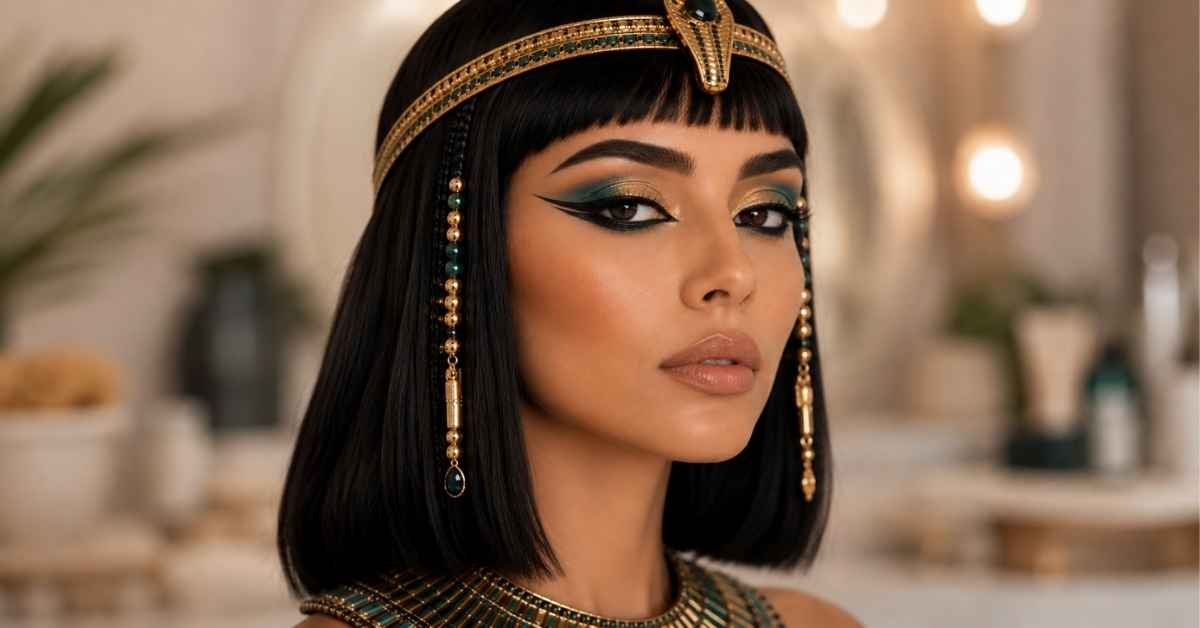
Cleopatra Makeup: Master 5 Ancient Secrets for a Regal Look
Recreate Cleopatra makeup with authentic ancient techniques and modern tools. From bold kohl wings to gold lids, transform your style!
From the Nile to Your Vanity — The Living Art of Cleopatra Makeup
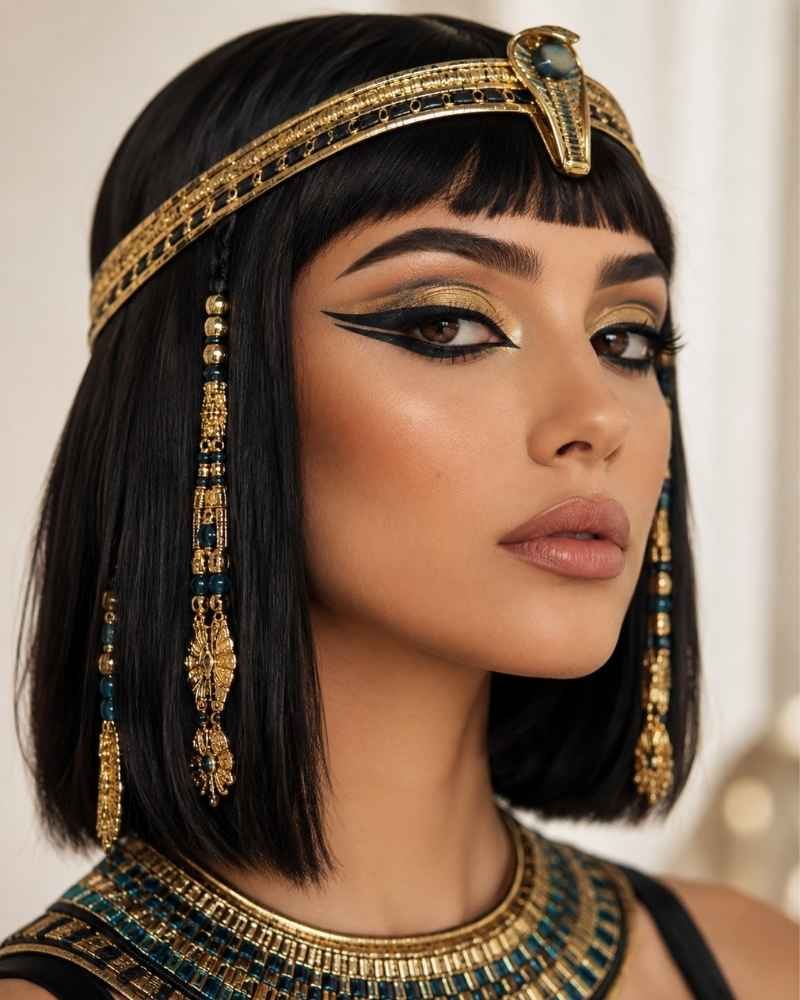
I have studied a lot of beauty traditions in my years writing for Shine Beauty Now. Whether I am exploring the rebellious energy of alt makeup or the delicate, pencil-thin precision of 1930s makeup, none of them stop me quite the way authentic Cleopatra makeup does.
There is something genuinely haunting about the realization that a queen living over two thousand years ago understood facial geometry so perfectly. Her beauty rituals were so architecturally sound that they still feel powerful and visually striking today.
This is not a fleeting trend that was invented on social media and will disappear next season. This is one of the oldest recorded beauty systems in human history, documented in papyrus scrolls and preserved in minerals excavated along the Nile.
When I recreate Cleopatra makeup, I do not feel like I am following a basic tutorial. I feel like I am participating in a historical ritual that has survived the rise and fall of civilization itself.
What I want to give you today is a genuine understanding of why every element of this aesthetic exists. I want to show you how to translate it onto a modern face so it looks intentional, artful, and completely extraordinary.
What Ancient Egypt Actually Taught Us About the Eye
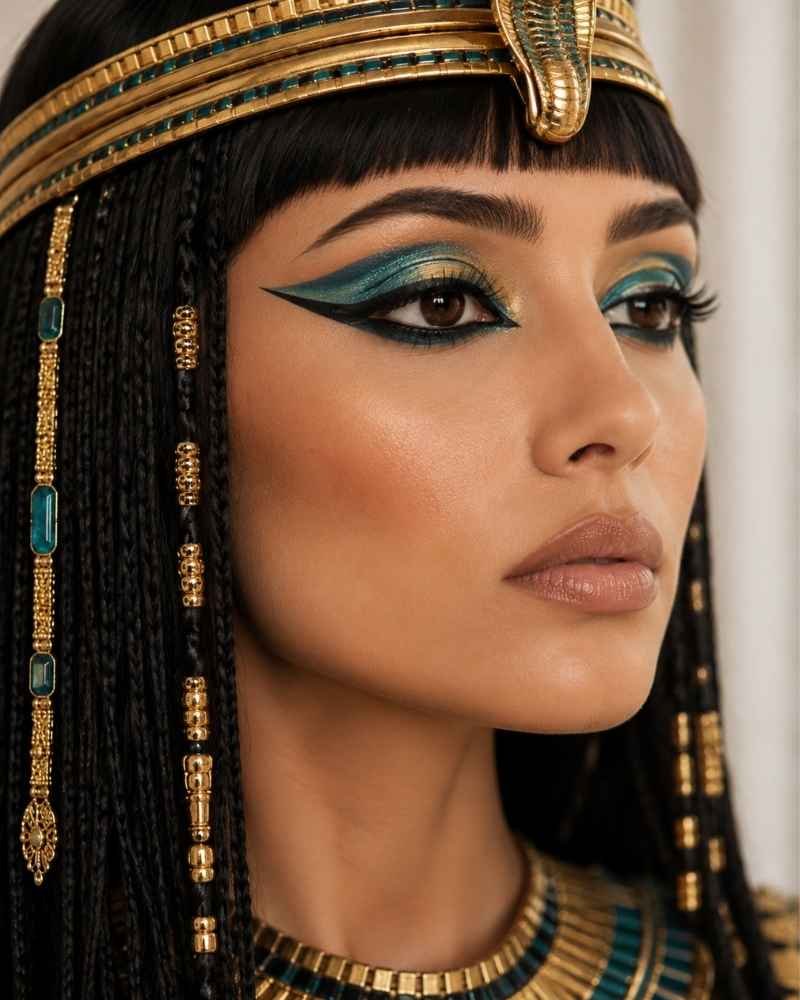
Before I tell you which modern products to reach for, you need to understand something that most basic beauty articles skip entirely. Egyptian cosmetics were never purely decorative; they were highly functional and technological.
The thick black kohl that defined the queen’s eye was a compound of galena mixed with animal fat. Ancient Egyptians discovered that this mineral compound actually reduced bacterial infections, reflected harsh solar glare, and created a humidity barrier around the eye.
The shimmering blue-green pigment painted across royal eyelids came from ground malachite and lapis lazuli. These copper minerals carried deep symbolic meaning, with green representing the annual rebirth of the Nile flood and blue carrying the authority of the sky gods.
When you apply these techniques today, you are not simply applying colour to your face. Every line you draw should feel deliberate and structural, carrying the weight of religion, political authority, and scientific innovation.
The 5 Pillars of Cleopatra’s Beauty Ritual
I. The Sacred Skin Preparation
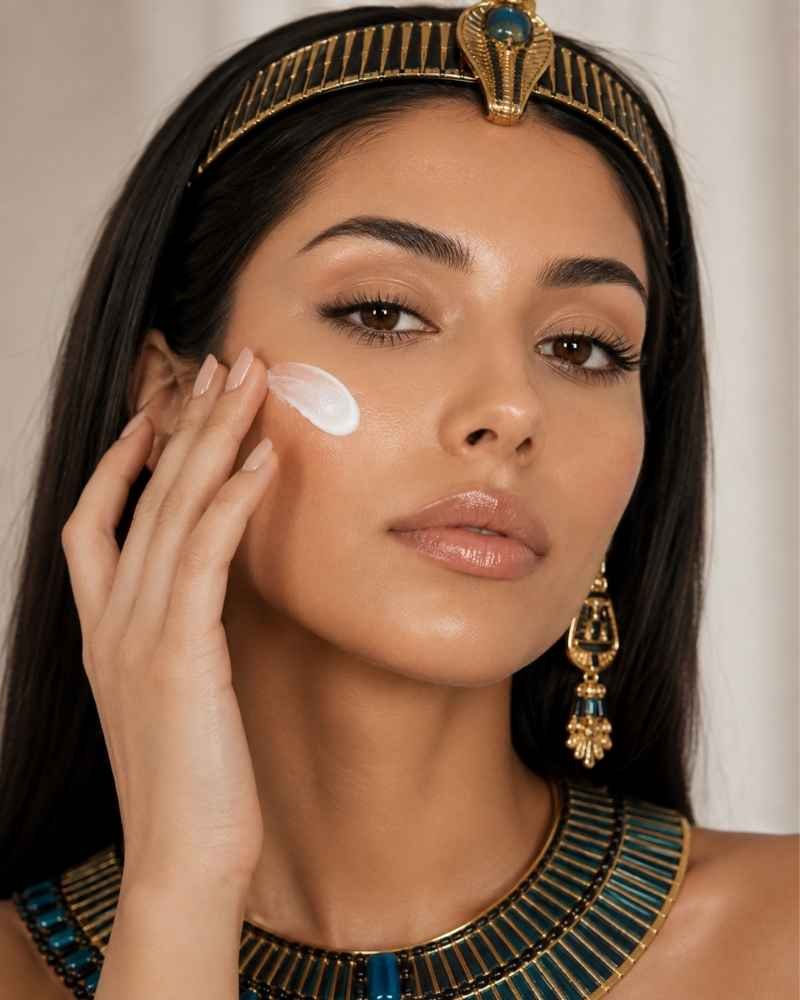
Egyptian court beauty began hours before any pigment touched the face. Documented royal bathing rituals involved submersion in warm water infused with raw honey, natron salts, and pressed lotus flower oils.
In your modern routine, this translates to one non-negotiable principle: heavy cosmetics must sit on hydrated skin, never on dryness. Before reaching for foundation, cleanse your face with a gentle honey-based wash and layer on a deeply hydrating serum.
Apply a silicone- or water-based primer across your entire face, pressing it gently into your skin. To ensure your Cleopatra makeup sits flawlessly all day, a dedicated eye primer is critical because the dense shadow pigments will crease rapidly without a proper barrier.
Use a medium-to-full coverage foundation matched precisely to your skin tone to create a smooth, even, luminous surface. The Egyptian aesthetic never sought to contour or alter the natural complexion dramatically; the goal was always a flawless, radiant canvas.
II. The Architecture of the Wing
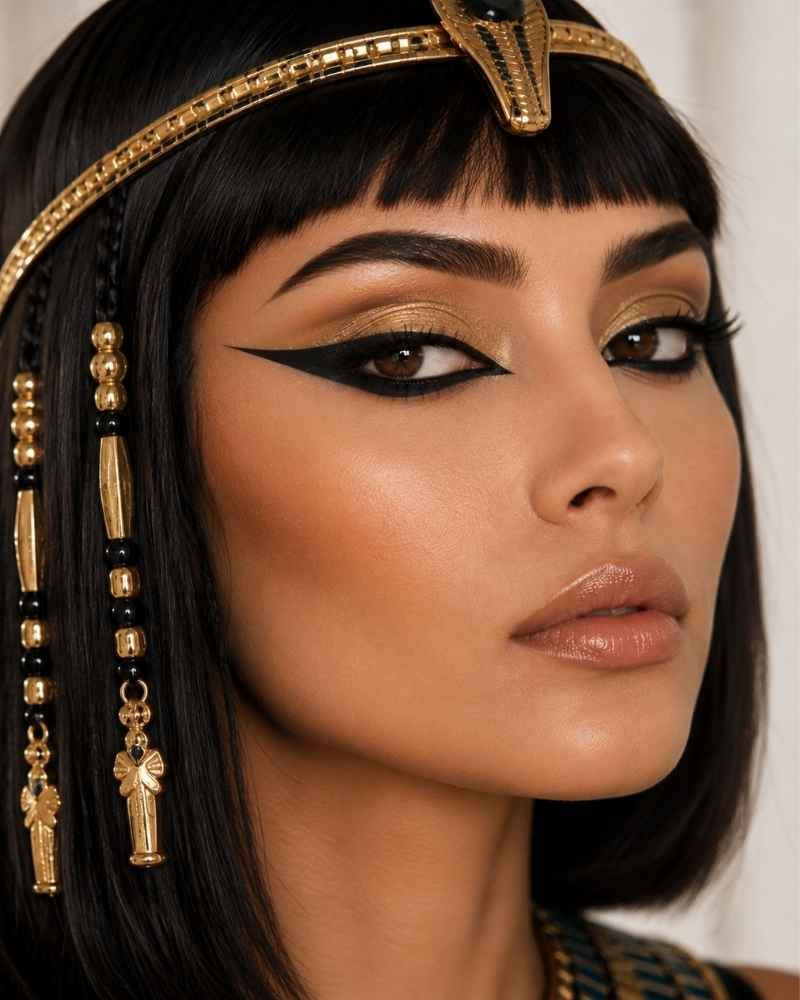
The elongated eye shape is the entire soul of Cleopatra makeup, and it deserves far more attention and respect than most modern tutorials give it.
If you look carefully at statues found in the Valley of the Kings, the eyeliner does not merely extend upward from the outer corner. It travels horizontally and firmly toward the temple, following the natural orbital bone to elongate rather than lift the eye.
This creates a fundamentally different visual effect from a standard cat-eye, giving Cleopatra makeup a horizontal intensity that reads as piercing, authoritative, and completely calm all at once.
Begin your line at the very inner corner of your eye using a waterproof gel liner or high-quality felt-tip pen. As you reach the outer corner, resist the urge to sweep dramatically upward; instead, extend the line outward to mimic the feline grace of ancient goddesses.
Connect a second line along your lower lash line, bringing it inward from the outer corner. Set this finished liner with a small flat brush loaded with matte black eyeshadow to eliminate any chance of smudging throughout the day.
III. The Mineral Pigments — Colour With Meaning
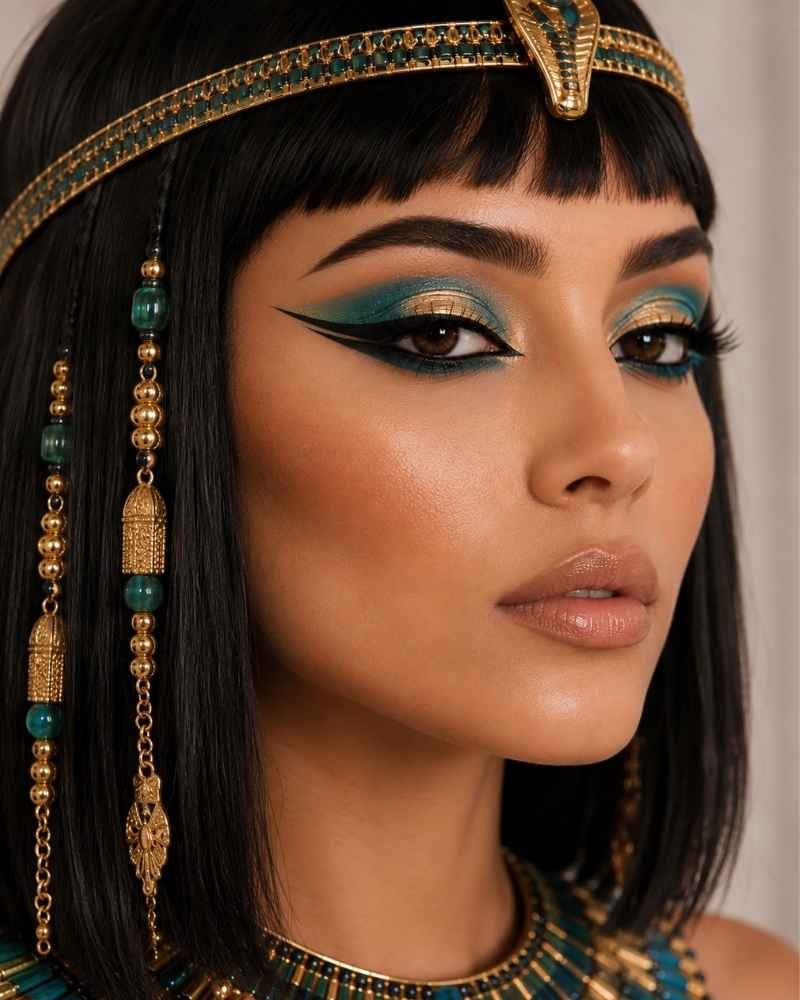
Choose your eyeshadow colours the same way ancient royalty did: with symbolic intention rather than purely aesthetic preference.
To achieve a historically accurate Cleopatra makeup aesthetic, cobalt or lapis blue pressed firmly across the mobile lid is the most visually striking choice. This shade reads as deeply luxurious, especially when set against the harsh blackness of your heavy kohl liner.
Emerald or malachite green offers a slightly warmer, earthier interpretation of the same tradition. This rich aesthetic pairs flawlessly with emerald green nail designs if you want to complete your royal styling from head to toe.
Gold shimmer pressed directly onto the center of the lid is a contemporary addition that elevates the look from historical artifact to modern masterpiece. Apply it densely with a flat brush so it catches every angle of light when you blink.
Blend your eyeshadow colours intentionally, but avoid over-blending them into sheer softness. The Egyptian aesthetic requires colour to have visible, saturated edges that hold immense visual impact.
IV. Brows That Frame the Eye With Authority
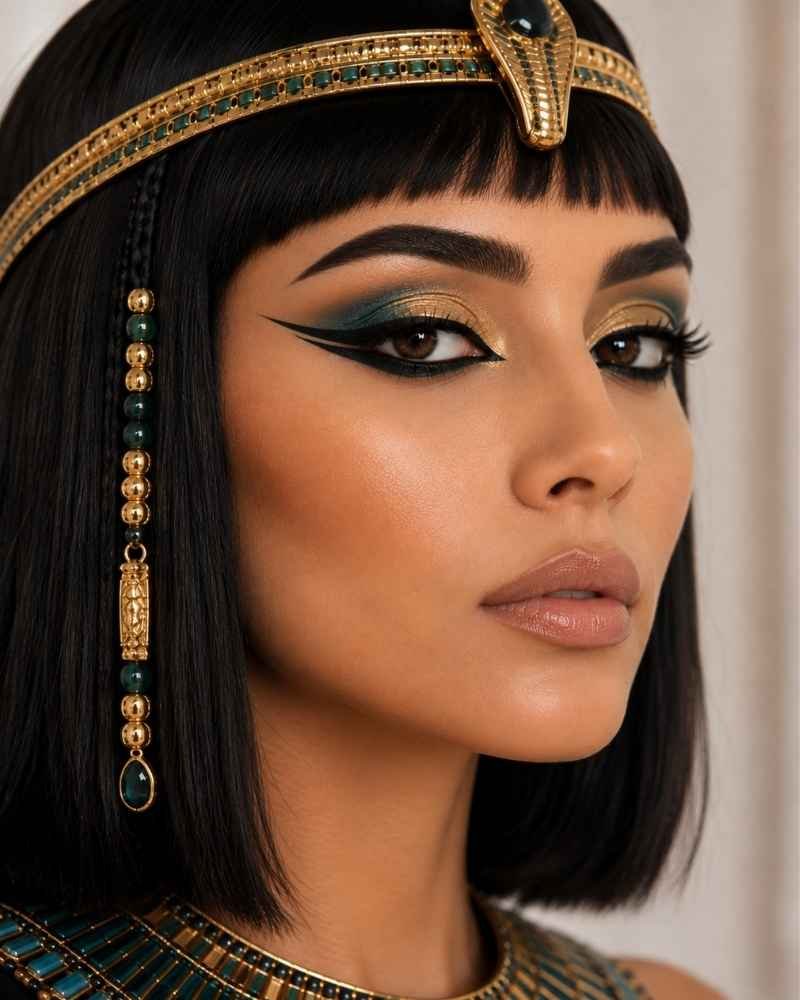
Elongated, dark, precisely defined eyebrows were never incidental to Cleopatra makeup — they were structural. The brow line and the heavy eyeliner functioned together as a single compositional frame around the eye.
Your brows should be filled with a deep espresso or black pomade, featuring a clean, high arch and an extended outer tail. The tail of your brow should extend fractionally beyond its natural stopping point, running parallel to the direction of your liner wing.
Keep the front of your brow softer by brushing the hairs slightly upward with a clear brow gel. This provides a textured, modern finish that prevents your Cleopatra makeup from veering into costume territory.
Do not over-thin or over-arch your brows during this process. Historical Egyptian brows were full, substantial, and commanding, carrying genuine visual weight on the upper half of the face.
V. The Earth on Your Lips and the Sun on Your Skin
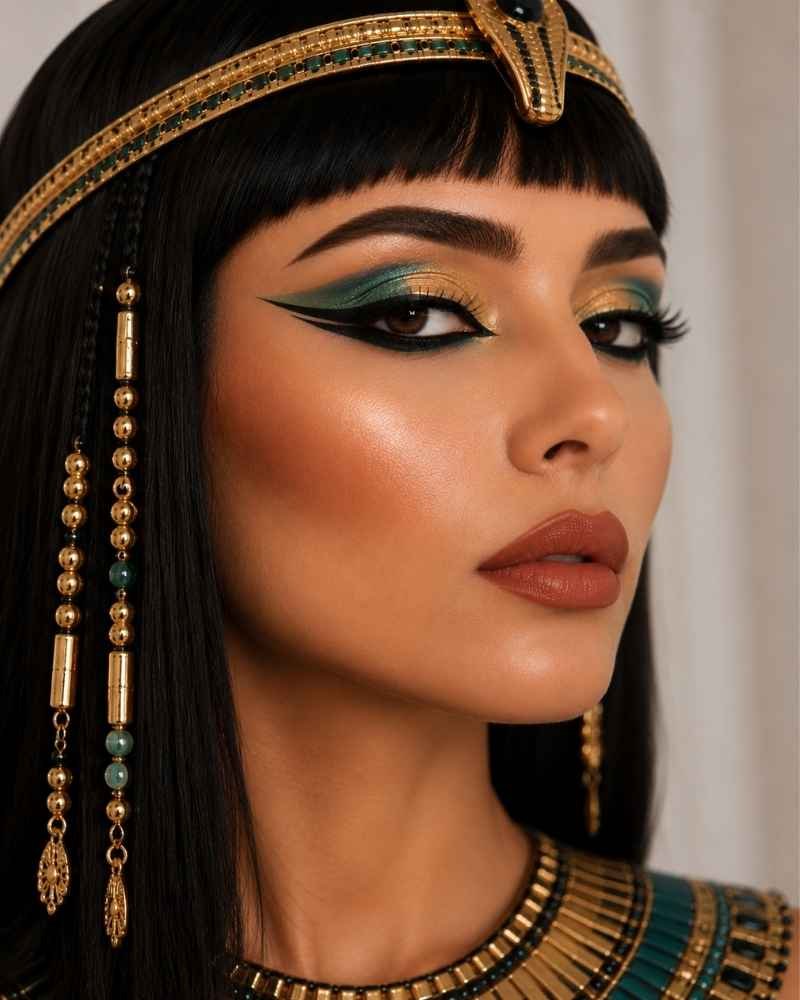
While the eyes dominate Cleopatra makeup completely, the finishing details on your cheeks and lips determine whether the overall aesthetic coheres beautifully or falls apart.
Skip cool-toned pink blushes entirely, as they conflict with the warm, mineral palette of the eyes. Instead, sweep a matte warm bronzer lightly across your temples and cheekbones to create structural warmth that mimics the desert sun.
For lips, use a terracotta brick-red or warm berry lip stain rather than a thick, glossy lipstick. Ancient Egyptian lip preparations used red ochre clay, and a modern liquid stain mimics this earthy, pressed-in warmth perfectly.
This muted, natural lip warmth looks incredibly stunning when paired with subtle, glossy glazed donut nails for a perfectly balanced, modern finish. Finish your face with a single drop of luminous highlighter pressed only to the high points of your cheekbones.
Adapting Cleopatra Makeup Without Losing the Essence
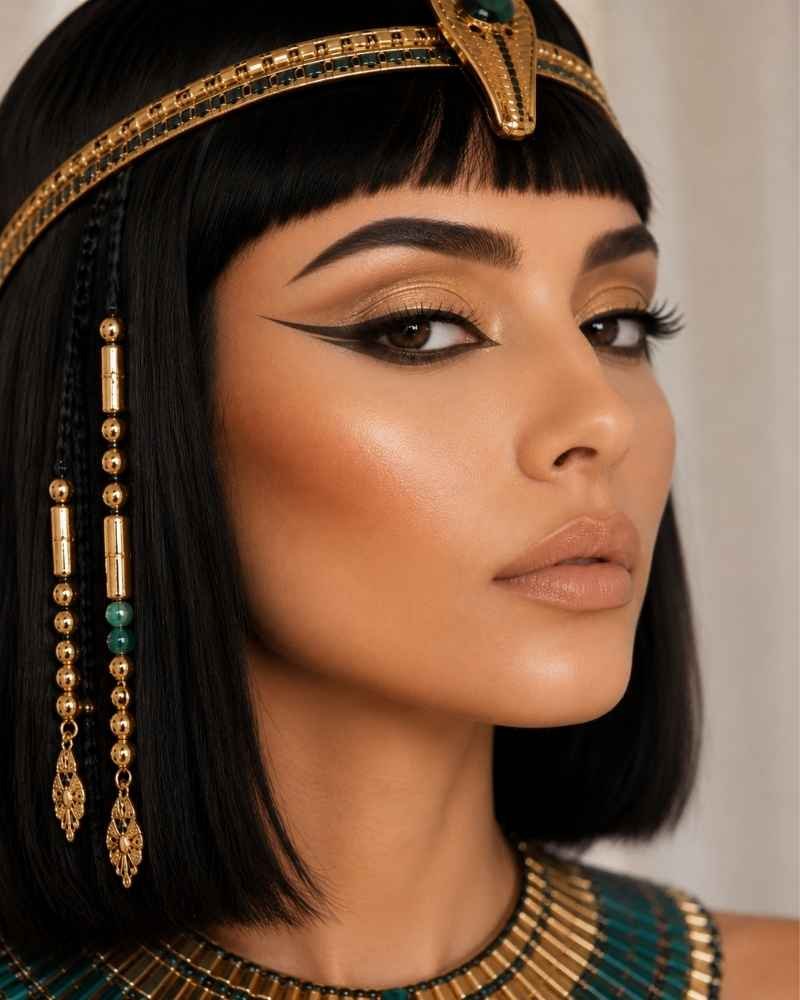
The most common mistake I see when clients attempt Cleopatra makeup is recreating only the surface colours without understanding the underlying horizontal geometry.
The essence of this look relies entirely on horizontal elongation and saturated colour density. As long as you protect those two specific qualities, you can adapt every other element to suit your face shape, event, or personal comfort level.
For a daytime variation, switch the harsh black liner for a deep espresso brown, soften the lid shadow to a warm champagne gold, and keep the lips entirely nude. The structural authority remains, but the drama is softened for the office.
Interestingly, this graphic liner technique has heavily influenced modern anime makeup trends due to its dramatic, eye-enlarging properties. Whether you are attending a creative festival or simply experimenting at your vanity, the applications for this ancient geometry are endless.
Removing Heavy Cleopatra Makeup Pigments Gently
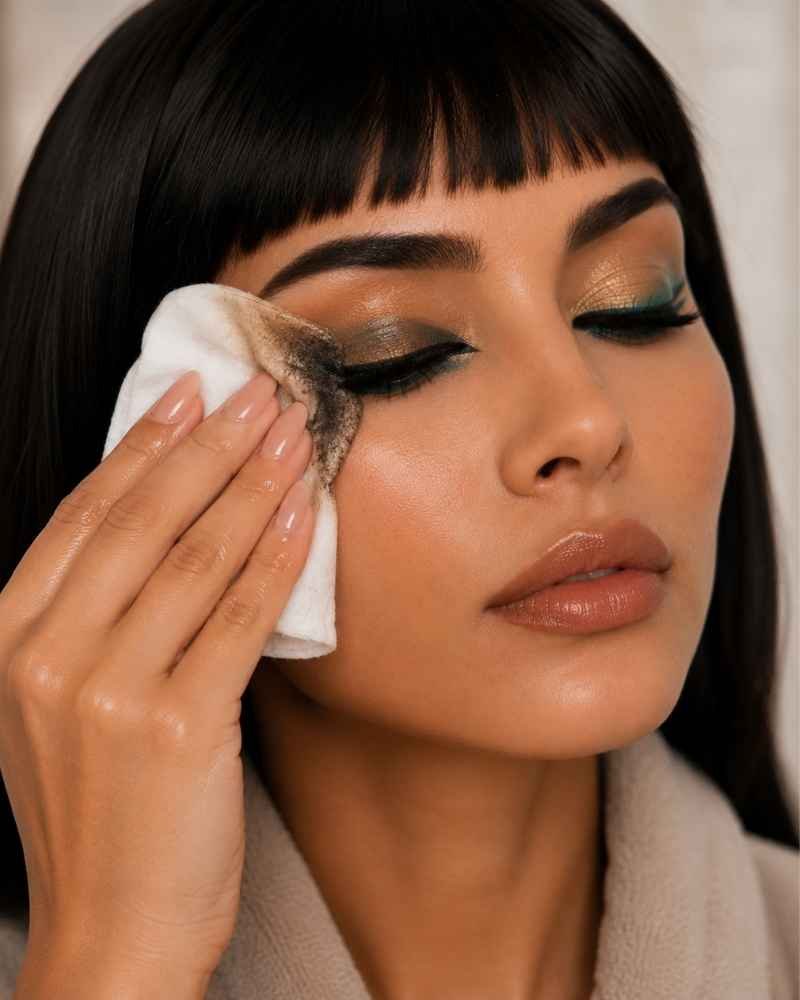
Because authentic Cleopatra makeup requires dense, waterproof pigments and heavily layered liners, your removal process matters just as much as your application.
Press a warm, oil-based cleansing balm across your closed eyes and allow it to dissolve the liner for a full thirty seconds before gently wiping it away. This completely prevents the mechanical tugging and rubbing that damages delicate orbital skin over time.
Follow up with a hydrating cream cleanser to remove any remaining oil residue from your pores. Finish your evening routine with a rich eye cream to restore vital moisture to the skin barrier overnight.
Conclusion
Cleopatra makeup has survived millennia not simply because it is fashionable, but because it is architecturally and historically brilliant. It understands the human face at a structural level that most modern beauty trends never stop to consider.
When you take the time to learn the logic behind the extended wing, the meaning behind the copper pigments, and the ritual behind the skin prep, this look becomes deeply personal. It stops being a mere recreation and starts being a genuine continuation of a powerful female legacy.
Take your time with the application process. Nothing about Cleopatra makeup should ever be rushed, because every line drawn deliberately will look infinitely more royal than a dozen lines applied in haste.
Frequently Asked Questions
What exact colours did ancient Egyptians use on their eyelids?
Archaeological analysis of cosmetic vessels confirms the use of powdered green malachite on the lower lid and crushed lapis lazuli blue on the upper lid. Gold dust was also frequently documented in high-status royal preparations.
Is it safe to use ancient kohl for Cleopatra makeup today?
Traditional ancient kohl contained lead-based minerals that are highly unsafe for modern use. Always select ophthalmologist-tested, modern kohl-effect pencils clearly labelled as waterline-safe for your makeup routines.
How do I stop the long liner wings from becoming uneven on both eyes?
Rest your drawing elbow on a flat, stable surface to eliminate any hand tremor. Map small reference dots at the intended end-point of each wing before drawing the full line, ensuring both extensions are identical before committing.
How do I adapt this heavy Cleopatra makeup look for a professional work environment?
Replace the black liquid liner with a deep dark brown and reduce the wing length to sit just at the outer corner. Use champagne gold eyeshadow instead of vibrant blue, keeping the structural elongation while softening the drama.
What is the best way to set Cleopatra makeup so it stays vivid all day?
Apply an oil-free eye primer first, then press your shadow firmly onto the lid using a flat packing brush rather than sweeping it. Finally, mist your closed eyes lightly with a setting spray before moving on to your foundation.






One Comment